
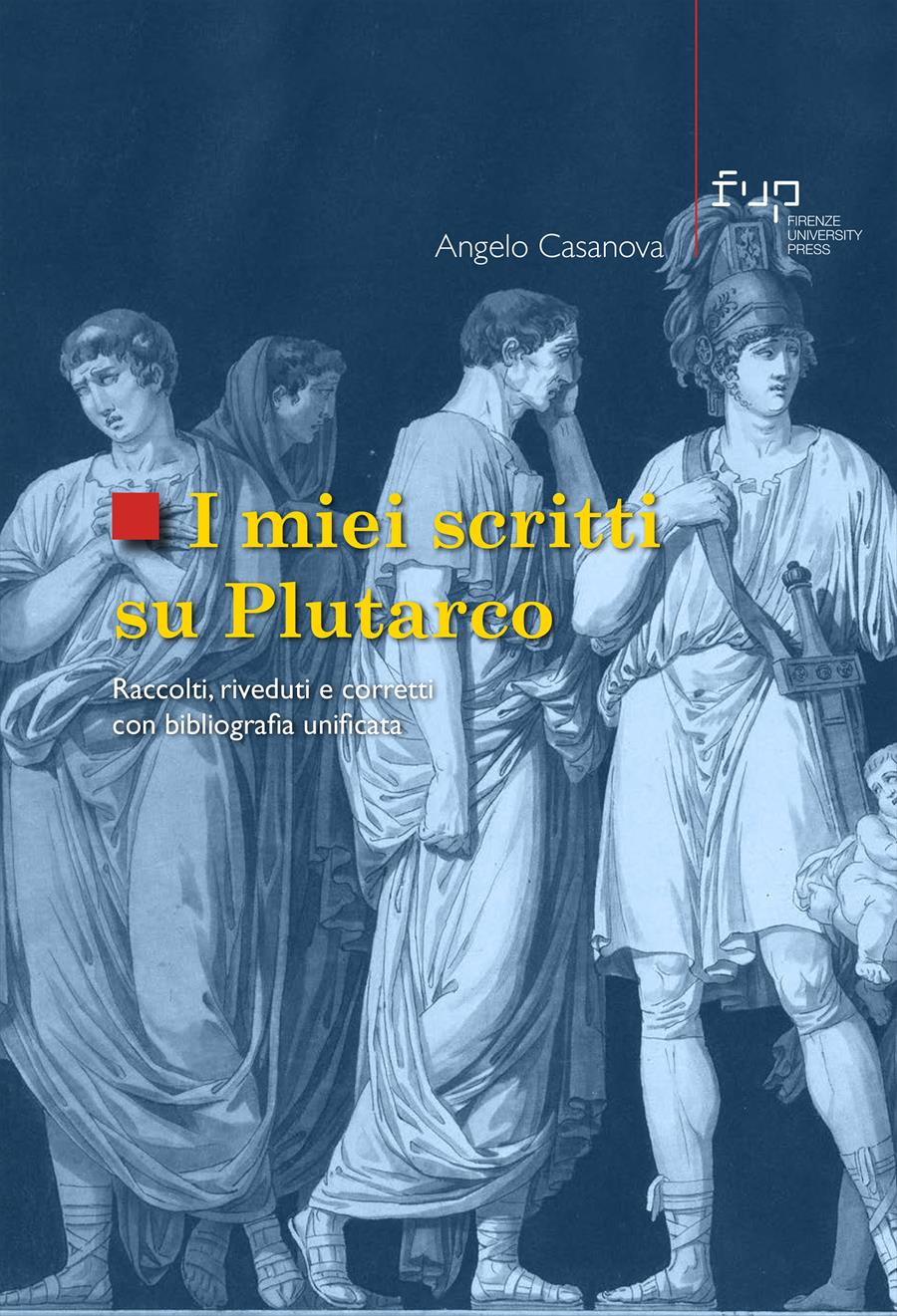
- I miei scritti su Plutarco
- Angelo Casanova
Plutarco, Quaest. Conv. III, 659A: gli influssi della luna
- Angelo Casanova

- © 2025 Author(s) |
- CC BY 4.0
- DOI: 10.36253/979-12-215-0824-6.05
Table-talk 3.10 presents a discussion about the influences of the Moon on meat preservation and all the agrarian works, with obvious references to its different phases. In particular, a passage of the text can only be understood by keeping in mind the traditional language connected with the lunar calendar. By experience, woodcutters and farmers know what particular operations are recommended in every week of the lunar month: Plutarch (as well as Hesiod, Pliny, and several other ancient authors) is well aware of this.
- Keywords:
- Table-Talks,
- Moon influences,
- meat preservation,
- lunar phases,
- agrarian works,
University of Florence, Italy
Chapter Information
Chapter Title
Plutarco, Quaest. Conv. III, 659A: gli influssi della luna
Authors
Angelo Casanova
Language
Italian
DOI
10.36253/979-12-215-0824-6.05
Peer Reviewed
Publication Year
2025
Copyright Information
© 2025 Author(s)
Content License
Metadata License
Bibliographic Information
Book Title
I miei scritti su Plutarco
Book Subtitle
Raccolti, riveduti e corretti con bibliografia unificata
Authors
Angelo Casanova
Peer Reviewed
Number of Pages
366
Publication Year
2025
Copyright Information
© 2025 Author(s)
Content License
Metadata License
Publisher Name
Firenze University Press
DOI
10.36253/979-12-215-0824-6
ISBN Print
979-12-215-0823-9
eISBN (pdf)
979-12-215-0824-6
eISBN (xml)
979-12-215-0825-3
Series Title
Studi e saggi
Series ISSN
2704-6478
Series E-ISSN
2704-5919