
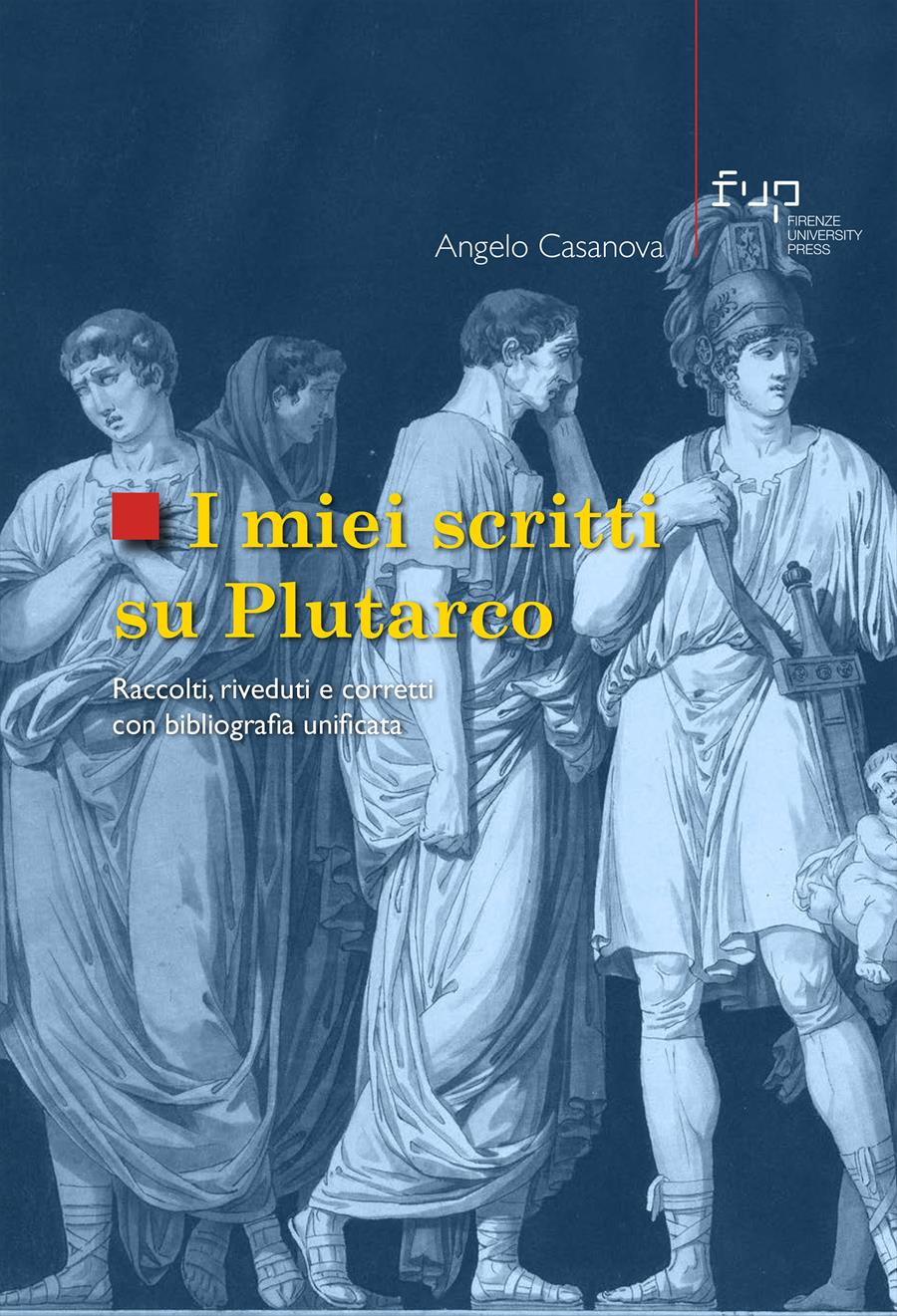
- I miei scritti su Plutarco
- Angelo Casanova
La vela di Teseo e la tintura di Simonide
- Angelo Casanova

- © 2025 Author(s) |
- CC BY 4.0
- DOI: 10.36253/979-12-215-0824-6.22
At Thes. 17 Plutarch states that, according to Simonides, Theseus’ ship was steered by the Trojan Phereclus, and in case of success it was to raise not a white sail, but a purple one, colored with the dye obtained from the holm-oak (pace Orlando Poltera). Through both these details the poet emphasized the Athenians’ sailing inexperience at that early time, when they still used the ‘terrestrial’ dye rather than the Phoenician purple, extracted from a sea shell. This paper dwells on this dye’s peculiarities, by referring to modern scientific explanations as well as to the several ancient opinions on the matter.
- Keywords:
- Theseus,
- Simonides,
- ‘vegetable’ dye,
- sea-shell purple dye,
- holm-oak,
- kermes ilicis,
University of Florence, Italy
Chapter Information
Chapter Title
La vela di Teseo e la tintura di Simonide
Authors
Angelo Casanova
Language
Italian
DOI
10.36253/979-12-215-0824-6.22
Peer Reviewed
Publication Year
2025
Copyright Information
© 2025 Author(s)
Content License
Metadata License
Bibliographic Information
Book Title
I miei scritti su Plutarco
Book Subtitle
Raccolti, riveduti e corretti con bibliografia unificata
Authors
Angelo Casanova
Peer Reviewed
Number of Pages
366
Publication Year
2025
Copyright Information
© 2025 Author(s)
Content License
Metadata License
Publisher Name
Firenze University Press
DOI
10.36253/979-12-215-0824-6
ISBN Print
979-12-215-0823-9
eISBN (pdf)
979-12-215-0824-6
eISBN (xml)
979-12-215-0825-3
Series Title
Studi e saggi
Series ISSN
2704-6478
Series E-ISSN
2704-5919